How Many Of Your "Medication Errors Are Actually Avoidable Communication Failures With GPs And Pharmacies?
The trifecta of communication between GP practices, care homes and pharmacies is the key triangle on which good medication management exists within this care environment.
To ensure you are set up for good clear communication lines you need a few things:
Ideally you need one GP, one pharmacy and one care home. Within each of them, it helps to have one main lead that you speak to. At the GP, this may be a named receptionist. At the pharmacy, this may be a lead pharmacist, and at the care home it may be a designated medication lead.
Where multiple people are involved, communication lines can get messy unless they’re always via an audit means that everyone has access to.
One method of managing communication lines is regular meetings. This can be easily done via teams. These are annual, quarterly and monthly and will depend on prescribing volumes and availability of key people at the practice, pharmacy and the care home. Another way of managing communication lines is ensuring that all communication is written via an nhs.net email or a viable portal that all three practitioners and care home managers can access.
From our experience, communication lines are always best in written form. However, having regular verbal catch ups (ideally on a weekly basis if these can be planned into diaries) ensures that all other parts of the communication are kept in line and any misunderstandings are quickly ironed out.

Medication Errors:
Medication errors are traditionally caused at certain points in care when it comes to communication these include the following:
- Patient discharge from hospital
- Patient discharge from care home
- Patient’s change over from surgery.
- New medication initiation.
- Existing medication change in dose.
Let’s explore a few examples of practice where poor communication can lead to medication error in each of these scenarios.

Patient Discharged From Hospital:
Here’s what can happen if a patient is discharged with either a new or a changing medication therapy.
The altered therapy is either not prescribed or not communicated to the care home. An example of this is when we have given patients Propranolol MR capsules. At discharge, they have been prescribed alternatives and therefore due to this miscommunication, the care homes have given them both medications as they have been seen as separate doses.
In the above example, a clear communication line and verbal handover would’ve assisted in clarifying that both these medications were the same and prevented an overdose for the patient.
Equally, if the pharmacy had been involved with the discharge information, they would have been able to identify the error.

Quite often when patients change care facilities, they will also change both surgery and Pharmacy Provider. These large numbers of changes make it more viable that an error can occur as it creates a potential for a gap in knowledge of that patient.
Traditionally, NHS transfer of records and summary of Care records help to bridge this gap and ensure medication notes are not lost. They also ensure correct medication information is carried over. However, there are some cases where, in the short term before this information is passed over, there could be a chance for errors to arise. It is therefore essential when a new patient is taken into a care setting, surgery or pharmacy that all the Institutes help to verify the records and ensure that there are no gaps in changes over new prescribed medications.
New medication initiation: When a patient is started on a new medication with a care home, it is often via a visiting ANp or GP. Traditionally, notes for new medications are placed on the patient’s medication record. However, this is not accessible to the care home or the Pharmacy, and we are therefore reliant upon information that is handed over. It is normal, at this point, that the care home is given a brief as part of a handover of what the practitioner is going to prescribe. However, often this can be verbal and is then reliant upon the receiving party to add into handover notes and or onto care plans. The Pharmacy is only told usually by the care facility, and at this point this is secondhand information which can be misconstrued or miscommunicated back to the Pharmacy.

Patients Discharged From A Care Home:
If a patient moves care homes, often the new facility is reliant upon the MAR charts to help clarify exactly what the patient is on. This means any transcribing error can lead to misinformation for a potentially new GP, or a care facility. This is because it’s possible that MARcharts are handwritten, or have been transcribed from another piece of information.
When discharging patients from the care home, it’s essential that the information carried forward is both accurate and up-to-date with the latest patient history. For example, if the patient has recently been to hospital, the discharge medication letters should be cross referenced to ensure that only the latest medication is on the chart and the stopped medication are removed or clarified.
Patient Changeover From A Surgery:
Quite often when patients change care facilities, they will also change both surgery and Pharmacy Provider. These large numbers of changes make it more viable that an error can occur as it creates a potential for a gap in knowledge of that patient.
Traditionally, NHS transfer of records and summary of Care records help to bridge this gap and ensure medication notes are not lost. They also ensure correct medication information is carried over. However, there are some cases where, in the short term before this information is passed over, there could be a chance for errors to arise. It is therefore essential when a new patient is taken into a care setting, surgery or pharmacy that all the Institutes help to verify the records and ensure that there are no gaps in changes over new prescribed medications.
New Medication Initiation:
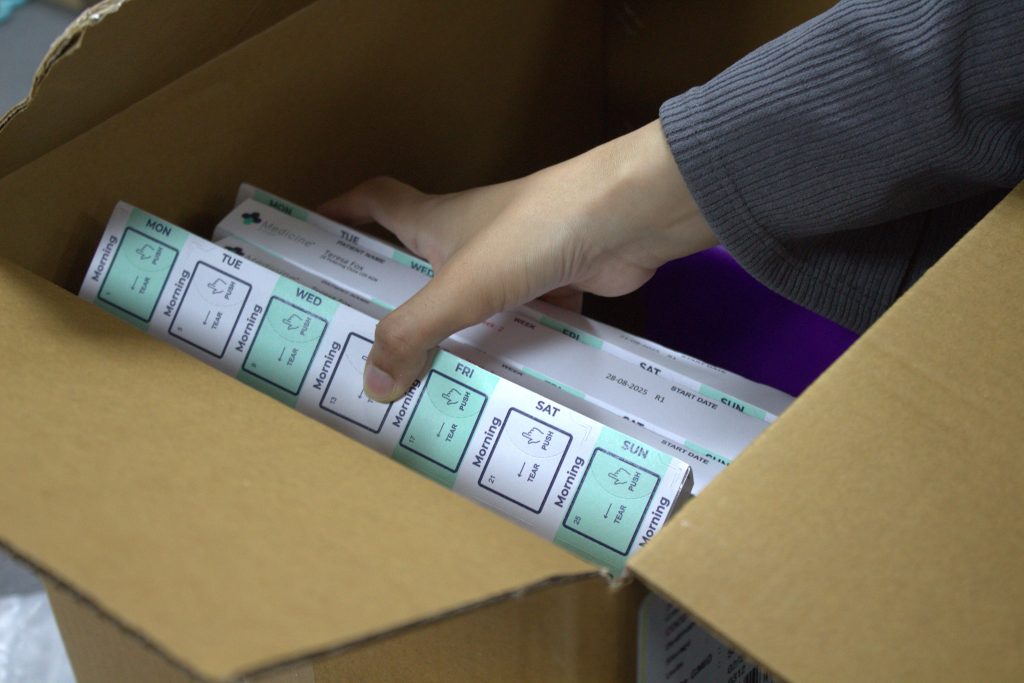
When a patient is started on a new medication with a care home, it is often via a visiting ANp or GP. Traditionally, notes for new medications are placed on the patient’s medication record. However, this is not accessible to the care home or the Pharmacy, and we are therefore reliant upon information that is handed over. It is normal, at this point, that the care home is given a brief as part of a handover of what the practitioner is going to prescribe. However, often this can be verbal and is then reliant upon the receiving party to add into handover notes and or onto care plans. The Pharmacy is only told usually by the care facility, and at this point this is secondhand information which can be misconstrued or miscommunicated back to the Pharmacy.
With newly initiated medications, it is important to ensure that there is written clarification on what the new medication is and the dosing. This written medication update can then be passed upon to the pharmacy, and can limit the chances of there being an error. It can also increase the likelihood of the medication being received within time.
Finally, medication dose changes. These typically can lead to errors in communication where it is not clear what the new dose coming in should be, and all the patient has already been initiated on an existing dose.
It is important that prescribing practitioners are really clear about what the new dosing should be.They must ensure that it is written, and is effectively communicated to the residential care home or the nursing home. This will allow them to relay the expectations back to the Pharmacy, and insert them into the care plan. This information can then be double checked when the new medications arrive at the care home to ensure it follows through from the prescribers visit.